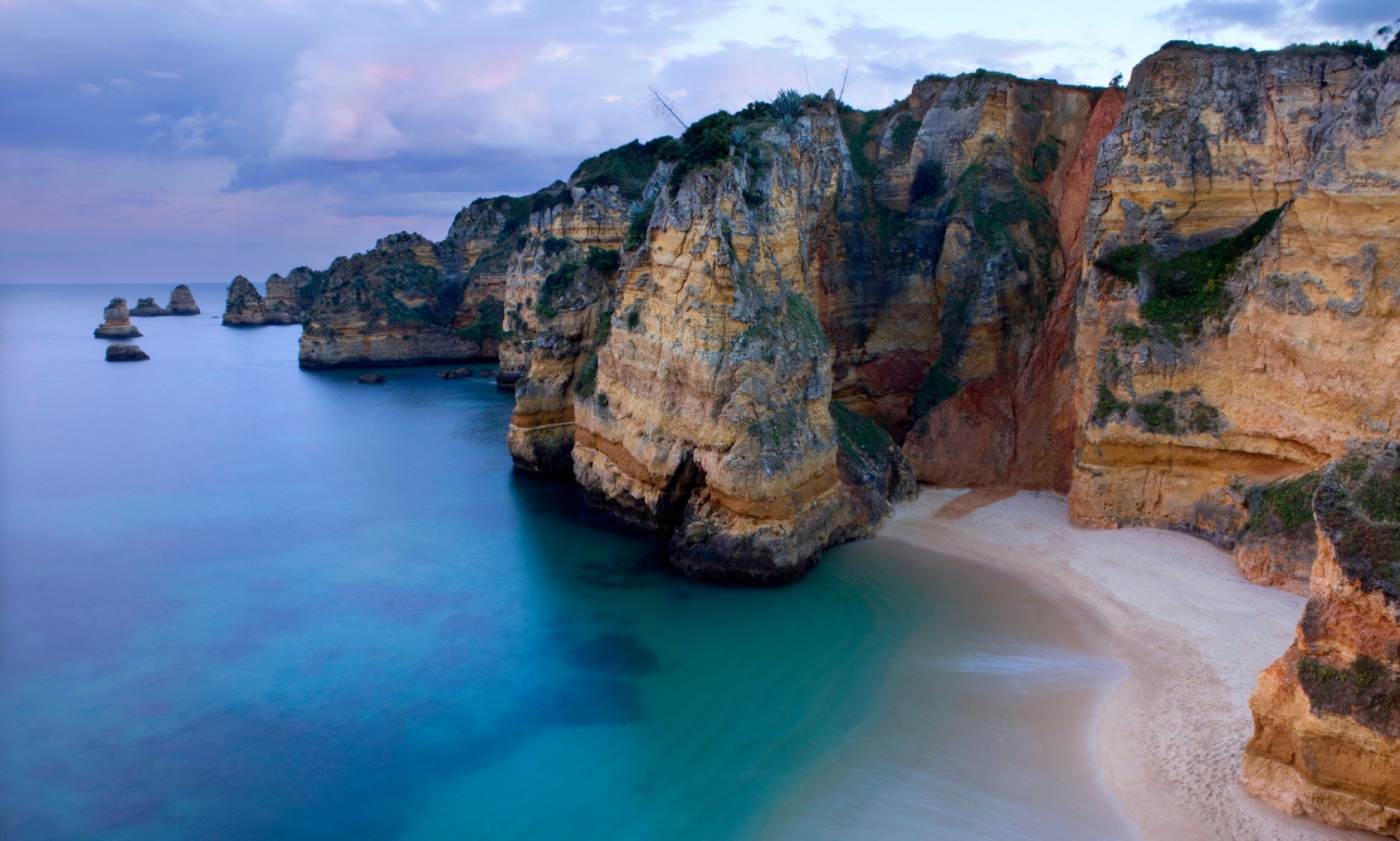


Have you visited any of these lesser-known European destinations?

Montenegro
This less-visited Balkan country sits on the Adriatic Sea and shares a similar geography to Croatia, with beautiful sandy beaches and few crowds. Montenegro’s best-known attraction is the stunning Bay of Kotor, a fjord surrounded by cliffs and bordering the fortified medieval city of Kotor. The Bay also contains the tiny island, Gospa od Škrpjela, where a church was erected in 1630 to mark the spot where an image of the Madonna appeared.

Alentejo, Portugal
Just a couple of hours from Lisbon, Portugal’s Alentejo region is reminiscent of Tuscany without the crowds. Resplendent with vineyards, olive groves, and cork trees, the region also boasts beautiful beaches and historic cities like capital Evora. Those with a taste for the macabre will want to check out the 16th century Chapel of Bones, where thousands of skulls and bones arranged in elaborate patterns decorate the inside of the Church of São Francisco, but Evora’s most-visited attraction is a Roman temple that dates to the 1st century B.C.

Andorra
This tiny country, nestled in the Pyrenees between France and Spain, is best known for its ski slopes and excellent hiking terrain. Its capital city, Andorra la Vella, is also home to Europe’s largest spa, a stately Romanesque church, a 16th century stone mansion–Casa de la Vall–that contains the country’s only courtroom, and a quaint, cobbled “old quarter.”

Wroclaw, Poland
Picturesque Wroclaw is often overlooked in favor of Poland’s more popular cities, but is absolutely worth a visit. Hang out in colorful Market Square, featuring the Gothic Old Town Hall with its astronomical clock that dates to 1580. And be sure to take the elevator to the top of Wroclaw Cathedral for the best views of the city. Fun fact: if you’re traveling with kids, challenge them to see how many of the 300 bronze dwarf statues hidden in Wroclaw’s Old Town they can find.

Mdina, Malta
Tiny, fortified island Malta stands at the intersection of Europe, North Africa and the Middle East. Mdina, the island’s walled former capital city, was first settled more than 4000 years ago. Visit to admire its golden-stone architecture reflecting historic periods spanning the Norman to Medieval to Baroque. With limited vehicle traffic, few tourists, and streets that are lamplit after dark, it lives up to its nickname as “the silent city.”